
Sustainable Home Building in Panama: What FRESH Delivers
Modular Building • Apr 27, 2026 3:10:24 PM • Written by: Jordi van Marion
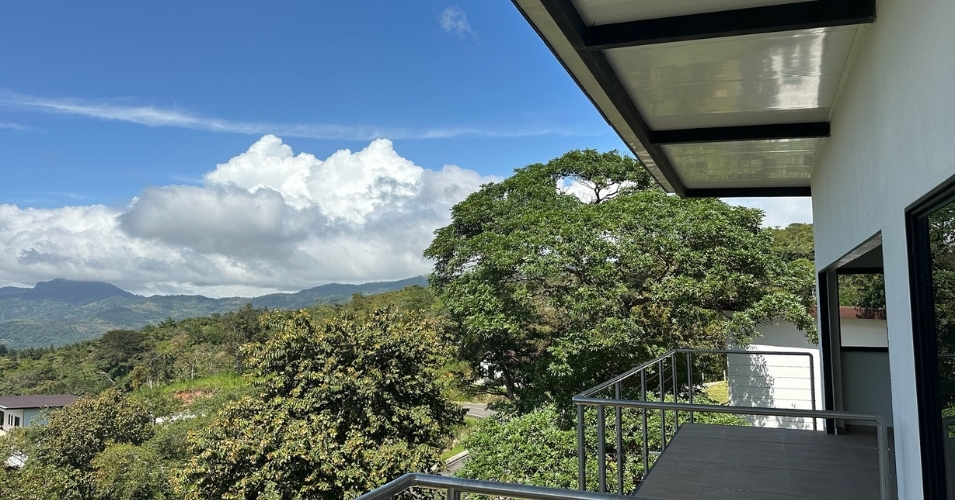
Sustainability is a word used loosely in construction marketing. It can mean a single energy-efficient feature added to an otherwise conventional build, or it can mean a building system designed from the ground up around minimizing environmental impact and maximizing long-term performance. FRESH is the latter.
Here is a clear account of what sustainable construction actually means in the context of Panama and how the FRESH system delivers on it in practice.
Why Sustainability Matters in Panama's Context
Panama is one of the most biodiverse countries in the world. Its forests, coastlines, and watersheds are not abstract environmental assets — they are directly connected to the quality of life that draws people to build and live here. The construction industry is one of the most resource-intensive human activities, and in a country like Panama, how you build has a real relationship to the environment you are building in.
Beyond environmental principle, sustainability in construction in Panama has practical dimensions. A home built with durable, appropriate materials requires less maintenance. A home with good insulation costs less to cool. A build that produces minimal waste is a cleaner, more efficient process for the client and the community around the site.
Construction Waste: What FRESH Eliminates
Conventional construction generates large volumes of waste. Block and mortar construction in particular produces cut-off material, mixed but unused concrete, packaging waste from multiple material deliveries, and the inevitable debris of an extended multi-trade build process. On remote or hillside sites, waste removal is an additional logistical challenge that adds cost and environmental impact.
The FRESH manufacturing process is designed to minimize waste at the source. Components are produced to specification in a controlled factory environment. The quantities are engineered, not estimated. What arrives on-site is what is needed. The assembly process is clean and structured — the contrast with a conventional construction site in terms of material debris is significant.
This waste reduction is not just environmentally sound. It is operationally efficient, and it reflects a broader design philosophy around doing more with less.
Energy Performance: Keeping Panama's Heat Out
In a tropical climate, insulation serves a different function than it does in colder environments. It is not about retaining warmth — it is about resisting heat gain. A home that allows Panama's heat and humidity to penetrate its envelope requires mechanical cooling to run constantly to maintain comfortable indoor temperatures. That is expensive to operate and contributes to a high energy footprint over the life of the building.
FRESH panels deliver an excellent insulation rating. The thermal performance of the building envelope keeps the interior significantly cooler than the external temperature without constant air conditioning. Residents notice this as a tangible comfort difference. The electricity bill reflects it as a measurable cost reduction.
This is arguably the most practically significant sustainability feature of FRESH homes for people living in them day to day.
Materials Designed to Last
Sustainable construction is in part about choosing materials that do not need to be replaced. The FRESH Steel Kit of Parts and FRESH Panels are designed specifically for durability in coastal, tropical, and humid environments — precisely the conditions that degrade conventional materials fastest in Panama.
Steel framing resists the moisture, insects, and biological activity that affect timber. The FRESH panel system maintains its performance without the cracking, efflorescence, and moisture ingress that affects block and render finishes in Panama's climate over time.
The maintenance requirements of a FRESH home are genuinely low. Industrial-grade materials throughout the building, combined with a design that gives easy access to infrastructure when servicing is needed, mean that the home performs well with less intervention over the long term. This is sustainability measured in the most concrete terms: a building that does not consume resources in disproportionate maintenance and repair throughout its life.
Earthquake Resistance as Sustainability
A building that is damaged by seismic activity and requires extensive structural repair or replacement is not a sustainable outcome. Panama's seismic activity makes this a real consideration for any residential build. The FRESH structural system is engineered to absorb seismic movement without losing integrity — which means the building remains standing and undamaged through the events that affect less well-designed structures.
Building to last in Panama's seismic environment is part of what building sustainably actually means here.
The Ecological Footprint of a FRESH Build
Taken together — waste-minimized manufacturing, high insulation performance, durable materials with low maintenance requirements, a fast site process that minimizes the footprint of construction activity — a FRESH build has a fundamentally smaller ecological footprint than a conventional build. This is not achieved through add-on features. It is a product of the system's design philosophy from the ground up.
Gatun Lake Construction's mission is to create homes that are sustainable not as an afterthought but as a central design principle. FRESH is the delivery mechanism for that mission.
To explore FRESH homes and learn more about sustainable residential construction in Panama, visit chiqworld.com or contact Gatun Lake Construction at gatunlakeconstruction.com.
Want to talk about your next project?

Jordi van Marion
COO Gatun Lake Construction S.A. Jordi van Marion is a seasoned professional with a wealth of experience in project management. Over the years, he has built a career marked by innovative leadership, international collaboration, and a results-driven approach. His expertise spans diverse industries, including construction, marketing, and ICT.