
How Long Does It Take to Build a Home in Panama?
Modular Building • Apr 27, 2026 3:08:53 PM • Written by: Jordi van Marion
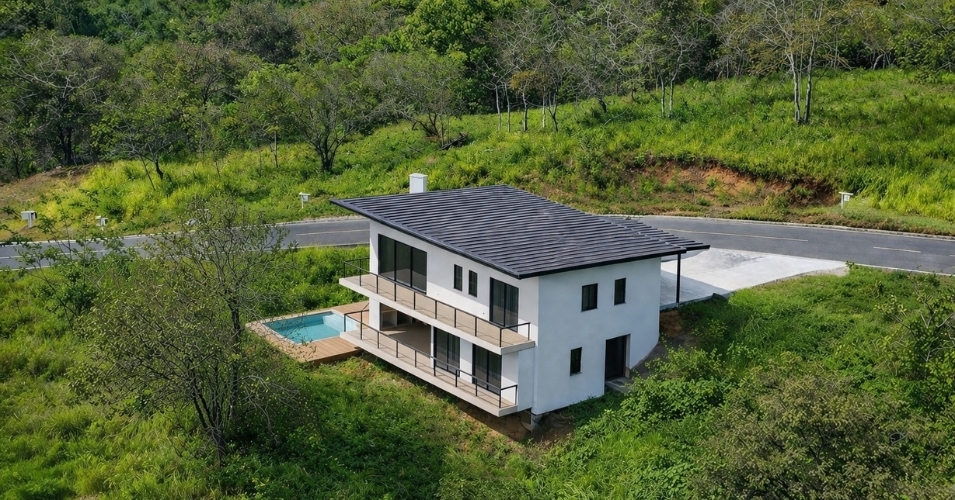
It is one of the first questions anyone planning a residential build in Panama asks — and the answer depends heavily on who you ask and how you build. Understanding realistic timelines, what drives delays, and how the right construction method can dramatically shorten the schedule will help you plan your project with accurate expectations.
The Conventional Answer
A traditionally built home in Panama — concrete block construction, which is the default for most residential projects in the country — typically takes between 12 and 18 months from groundbreaking to handover. On smaller, simpler projects with experienced contractors and straightforward sites, you might reach the lower end of that range. On more complex projects, in more remote locations, or with less experienced contractors, timelines extending beyond 18 months are not uncommon.
These timelines account for the cumulative impact of construction in a tropical climate. Panama's rainy season runs from approximately May through December. During this period, concrete work is complicated by persistent rainfall, exterior finishes are harder to apply and cure, and site access in rural or hillside locations can become genuinely difficult. Most conventional contractors factor delays into their estimates — or they should be.
What Drives Construction Delays in Panama
Beyond weather, construction delays in Panama typically stem from a predictable set of causes.
Supply chain and materials availability is a recurring challenge for conventional builds, particularly outside Panama City. Specific materials may need to be sourced from the capital or imported, creating lead times that are not always accounted for at the planning stage.
Labor continuity is another factor. Multi-trade construction requires coordinating different crews at different stages — foundation contractors, block layers, roofers, electricians, plumbers — each of whom may have competing commitments or varying availability.
Site conditions on rural or hillside lots add complexity at every stage, from initial access and earthwork through to finishing trades.
Permitting and inspections, while not inherently slow, add structured waiting periods to the timeline that need to be planned for.
The FRESH Difference: 50% Faster
The FRESH modular building system from Gatun Lake Construction delivers construction that is 50% faster than conventional methods. A home that would take a traditional contractor 12 to 18 months is completed in three to four months with FRESH.
This is not achieved through shortcuts or reduced quality. It is a structural advantage built into the method itself.
The FRESH Kit of Parts and FRESH Panels are manufactured in a controlled factory environment. While site preparation — foundations, infrastructure connections, access — is underway on the project location, the structural components of the home are being manufactured simultaneously. The two processes run in parallel rather than sequentially.
When components arrive on-site, assembly is fast and structured. The FRESH system does not depend on extended multi-trade sequences. The structural frame goes up quickly. The building is weathertight early. Interior finishes follow on a compressed timeline.
The reduction in total site time also means a shorter window during which the build is exposed to Panama's rainy season. A project that begins in April and completes in July or August has navigated the full build cycle during a single season. A conventional build starting in the same month might still be in open-frame construction when the heaviest rains arrive.
What 50% Faster Means in Practice
The practical implications of a faster build are more significant than the timeline itself suggests.
For buyers financing the build, carrying costs — construction loan interest, land holding costs, and any temporary accommodation — are directly proportional to build duration. A three-to-four-month project versus a twelve-to-eighteen-month project is a substantial difference in the cost of capital during construction.
For buyers relocating to Panama or planning to use the property for rental income, time to occupancy is directly valuable. A shorter build means earlier return on investment — whether that is measured in months of rental income or months of living in the home you planned.
For buyers managing a project from abroad — a common scenario given Panama's strong international buyer market — a shorter, more structured build process is simply easier to manage. Fewer decisions need to be made across a compressed timeline. The risk window is smaller.
A Realistic Project Timeline with FRESH
A typical FRESH project from initial consultation to handover runs roughly as follows. Site assessment and design finalization typically takes four to six weeks, depending on project complexity and how quickly decisions are made. Permitting runs concurrently with design finalization in many cases. Once permitting is in order and the build contract is signed, site preparation and component manufacturing begin simultaneously. Assembly and finishing takes three to four months. The total elapsed time from contract to keys — on a straightforward project — is typically in the range of five to six months.
This is a fundamentally different proposition from the standard Panamanian construction timeline, and it is one of the most compelling practical arguments for building with FRESH.
To discuss your project timeline and get a realistic assessment of what building with FRESH involves, contact Gatun Lake Construction at gatunlakeconstruction.com. To browse completed FRESH projects and available homes, visit chiqworld.com.
Want to talk about your next project?

Jordi van Marion
COO Gatun Lake Construction S.A. Jordi van Marion is a seasoned professional with a wealth of experience in project management. Over the years, he has built a career marked by innovative leadership, international collaboration, and a results-driven approach. His expertise spans diverse industries, including construction, marketing, and ICT.