
Why Modular Construction Outperforms Traditional Building in Panama's Climate
null • Apr 27, 2026 3:02:22 PM • Written by: Jordi van Marion
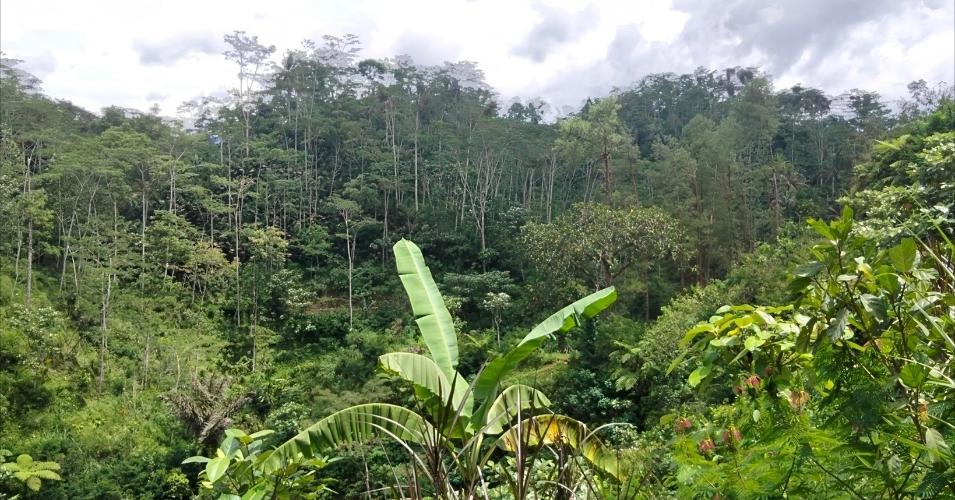
Panama is not an easy place to build. The combination of intense tropical rainfall, coastal humidity, seismic activity, and demanding terrain creates conditions that expose the weaknesses of conventional construction methods quickly. Materials deteriorate faster. Schedules are disrupted by rain. Open construction sites in coastal and mountainous areas face challenges that most traditional contractors simply manage around rather than solve.
Modular construction addresses Panama's climate directly — by design, not by accident. Here is why it consistently outperforms traditional building in this country.
The Problem with Conventional Construction in Panama
In a conventional build, everything happens on-site. Foundations are poured, walls are raised, roofs are installed, all exposed to Panama's weather throughout the process. In the dry season, this is manageable. In the rainy season, which runs from roughly May through December, it becomes a source of constant delays and rework. Concrete poured in the rain cures inconsistently. Framing exposed to moisture before enclosure invites mold. Projects that were planned for eight months extend to twelve or more.
Beyond scheduling, there is the question of materials. Standard concrete block construction — the default for most Panamanian residential builds — performs adequately in stable, dry environments. In coastal zones with salt air, in jungle-adjacent locations with persistent humidity, and in mountainous areas with high rainfall, the same materials demand constant maintenance. Paint fails. Render cracks. Moisture finds its way in and begins the slow work of structural degradation.
How Modular Construction Changes the Equation
Modular construction shifts the most critical work out of the field and into a controlled manufacturing environment. The FRESH Kit of Parts and FRESH Panels — the structural components of every FRESH home — are manufactured under controlled conditions in full compliance with industry quality standards and building codes. They arrive on-site engineered, tested, and ready to assemble.
This matters in practice in several ways.
The window of exposure to the elements is dramatically reduced. Where a conventional build might spend months in an open, partially constructed state, a FRESH home goes from ground preparation to weathertight structure in a fraction of that time. The assembly process is structured and fast, which means the site is closed before prolonged rainfall exposure becomes a risk.
The materials themselves are engineered for Panama's conditions. The FRESH Steel Kit of Parts and FRESH Panels are designed specifically for coastal, tropical, and humid environments. The steel structure resists the corrosion that conventional framing cannot. The panels deliver an insulation rating that keeps homes cool and comfortable without relying entirely on air conditioning — which is not only more comfortable to live in but meaningfully reduces long-term energy costs.
Earthquake Performance
Panama is situated in a seismically active region. Earthquakes of varying magnitude occur across the country, and any home built to last needs to account for them. The FRESH structural system is engineered for flexibility — the building is designed to absorb movement without losing its integrity. This is a fundamental advantage over rigid concrete block construction, which performs poorly under seismic stress.
Speed as a Practical Advantage
The FRESH system delivers construction that is 50% faster than conventional methods. In practical terms, a FRESH home that would take a conventional builder over a year to complete is finished in three to four months. That is not a marginal improvement — it is a fundamentally different timeline. For buyers who are planning a move, financing a build, or developing a property for rental income, the time difference has direct financial implications.
Terrain Without Limits
One of the most persistent challenges in Panamanian residential construction is the land itself. The most desirable locations — elevated sites with mountain views, coastal lots, rural properties with privacy and space — are often the hardest to build on with conventional methods. Steep gradients, difficult access, and remote locations add cost and complexity to traditional builds.
Gatun Lake Construction has built FRESH homes across Panama's most challenging terrains. Mountain villas at over 600 meters elevation in Altos de Campana, beach villas on Panama's Pacific coast, private villas in the interior provinces. The system is designed to perform on any terrain, which means the lot you want is not automatically off-limits because of how it sits.
The Bottom Line
Panama's climate and geography do not favor conventional construction. The combination of weather, terrain, seismicity, and the quality of materials needed to perform over the long term makes traditional building an increasingly difficult proposition, particularly outside Panama City's urban core.
Modular construction with FRESH is not a shortcut or a compromise. It is a building method engineered for exactly the conditions Panama presents. The result is a home that is faster to build, more resilient over time, and better suited to the environment it sits in.
To learn more about building with FRESH in Panama, visit chiqworld.com or contact Gatun Lake Construction directly at gatunlakeconstruction.com.
Want to talk about your next project?

Jordi van Marion
COO Gatun Lake Construction S.A. Jordi van Marion is a seasoned professional with a wealth of experience in project management. Over the years, he has built a career marked by innovative leadership, international collaboration, and a results-driven approach. His expertise spans diverse industries, including construction, marketing, and ICT.